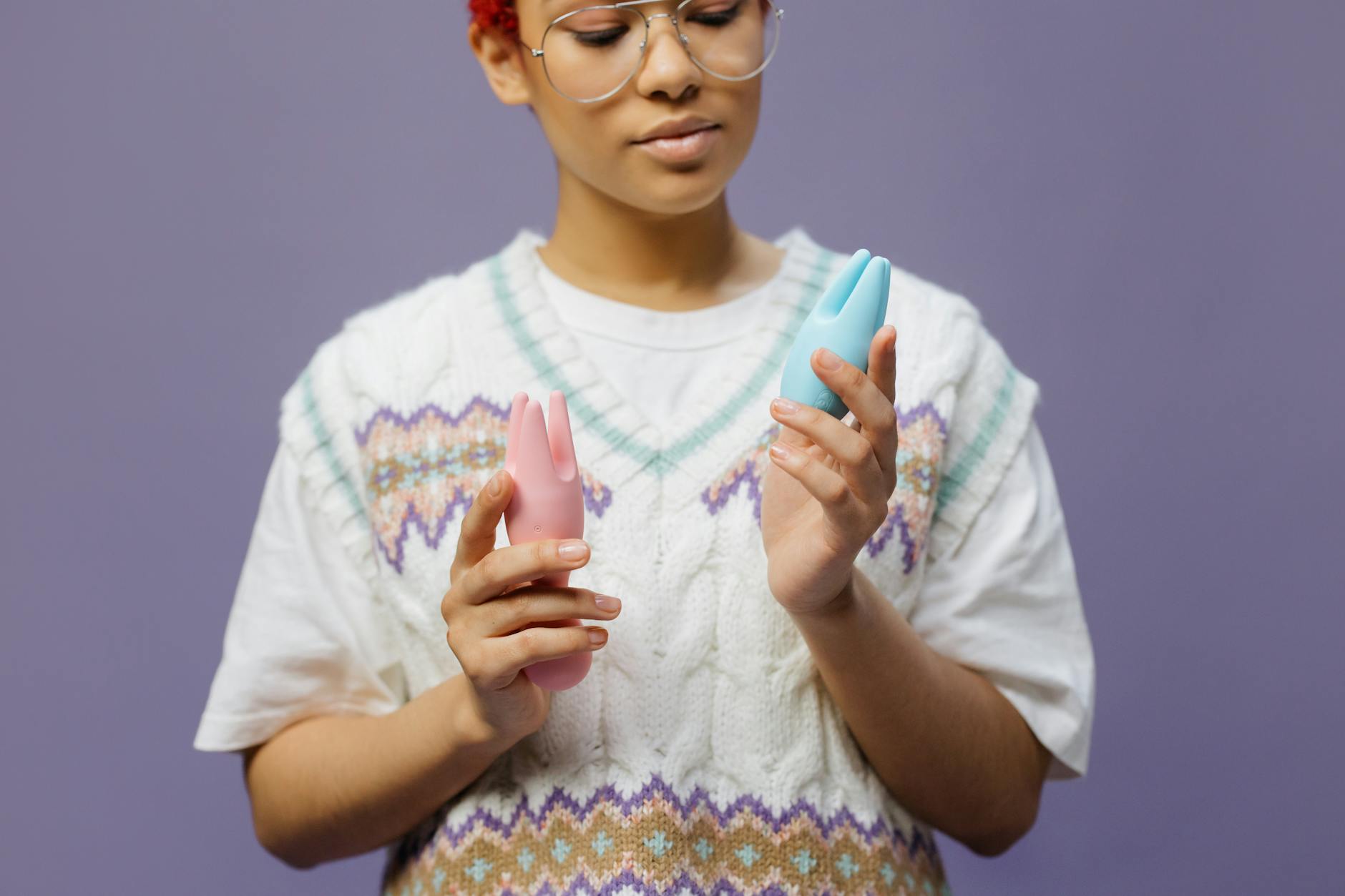
Let's talk about the mismatch that nobody names
One partner loves sensation. The other finds it overwhelming. One wants 20 minutes of buildup. The other wants to get there in five. One is curious about toys. The other thinks they'll feel like failure. These aren't small disagreements. They're the kind of friction that quietly erodes intimacy because both people are too embarrassed to say what's actually happening.
Here's what I see in my practice: couples don't argue about toys. They argue about feeling rejected, or pressured, or like they're not enough. The toy conversation is just the surface layer.
Why lemon vibrators change the dynamic
Lemon vibrators, and suction toys in general, work differently than traditional vibrators. Where a standard vibrator delivers rapid oscillation across a wide surface, a lemon clitoral vibrator creates a gentle suction and release pattern that feels more like a pulse than a buzz. This distinction matters for couples with mismatched preferences because it opens a third option.
Here's the practical bit: if one partner prefers direct, intense stimulation and the other finds it too much, a lemon vibrator often sits in the middle. The suction sensation feels less abrasive than traditional vibration, which means the partner who was overwhelmed might actually enjoy it. At the same time, it's more efficient than fingers alone, so the partner who wanted faster results gets what they need too.
I've watched couples discover that a lemon vibrator isn't a compromise toy that nobody loves. It's a genuine third preference that works better for both of them than either person expected.
The psychological piece is bigger than the physical one
Introducing a toy into partnered sex is an emotional minefield, especially if desire is already mismatched. The partner who initiated it worries they're being selfish. The partner who didn't suggests it feels defensive, like they're being told they're not enough. Both are anxious. Both are trying not to show it.
What changes when you frame it differently: "I found something that might make this feel better for both of us" is not the same as "I want to use a toy on you." The first sentence is about the experience. The second feels like a judgment.
With lemon vibrators, I often recommend starting with curiosity, not pressure. "I tried one of these and it felt so different. Want to see what I mean?" That's an invitation, not a demand. Let them hold it. Let them feel how light it is. Let them turn it on and feel the sensation on their own hand first. Removing the performance pressure removes most of the resistance.
When mismatched preferences get bigger
Sometimes the pleasure gap isn't about intensity. Sometimes it's about desire itself. One partner wants sex twice a week. The other wants it once a month. One partner has never experienced orgasm. The other orgasms easily. One partner is dealing with pain during sex. The other is frustrated by the frequency slowdown.
Lemon vibrators don't solve these problems on their own. But they can help in specific ways. If the issue is that one partner needs a longer buildup to orgasm and the other gets impatient, a lemon vibrator can actually shorten the timeline because the sensation is so direct. If the issue is that someone has never had an orgasm and feels broken, a lemon clitoral vibrator removes the pressure to achieve it through partnered contact alone.
The suction mechanism in a lemon vibrator (and lem vibrators specifically) mimics the kind of gentle, consistent stimulation that works for many bodies that find traditional vibration overstimulating. This is why they're so effective for people with sensitivity issues, for those dealing with sensation loss from hormonal changes, and for partners who have different thresholds for what feels good.
How to actually introduce it without it feeling clinical
Four steps that work:
Step one: Talk about it separately. Not during sex. Not with clothes off. Sit down and say, "I've been thinking about trying something different together. I found a lemon clitoral vibrator that some couples love. Would you be open to exploring it?" Full stop. Let them sit with it.
Step two: Manage expectations. Tell them what it will actually feel like. "It's not like a regular vibrator. It uses suction instead of vibration, so it feels gentler and more concentrated." If they're nervous, let them see it, hold it, turn it on. No pressure.
Step three: Start solo. The first time you use it should be alone, not together. Try it yourself first so you're not learning in front of them. When you come back to it together, you can say, "This is what I liked about it," and that's information, not pressure.
Step four: Use it as a supplement, not a replacement. The most successful couples I work with use lemon vibrators during foreplay or as part of partnered sex, not as the whole event. It's an addition to what you're already doing, not a substitute for manual stimulation or other kinds of touch.
The conversation underneath the conversation
Here's what I know after years of couples therapy: when people have different pleasure preferences, the real issue is usually "Do you still want me?" dressed up as "That toy doesn't feel good."
The partner who wants to introduce a toy is often scared that their partner doesn't find them attractive anymore, or that they're not inventive enough, or that the relationship is getting stale. The partner resisting is often scared that they're not enough, or that their body is wrong, or that their partner is losing interest.
A lemon vibrator can't fix those conversations. But using it together can open the door to them. When both partners agree to try something new, and both experience pleasure from it, something shifts. You're no longer on opposite sides. You're collaborating.
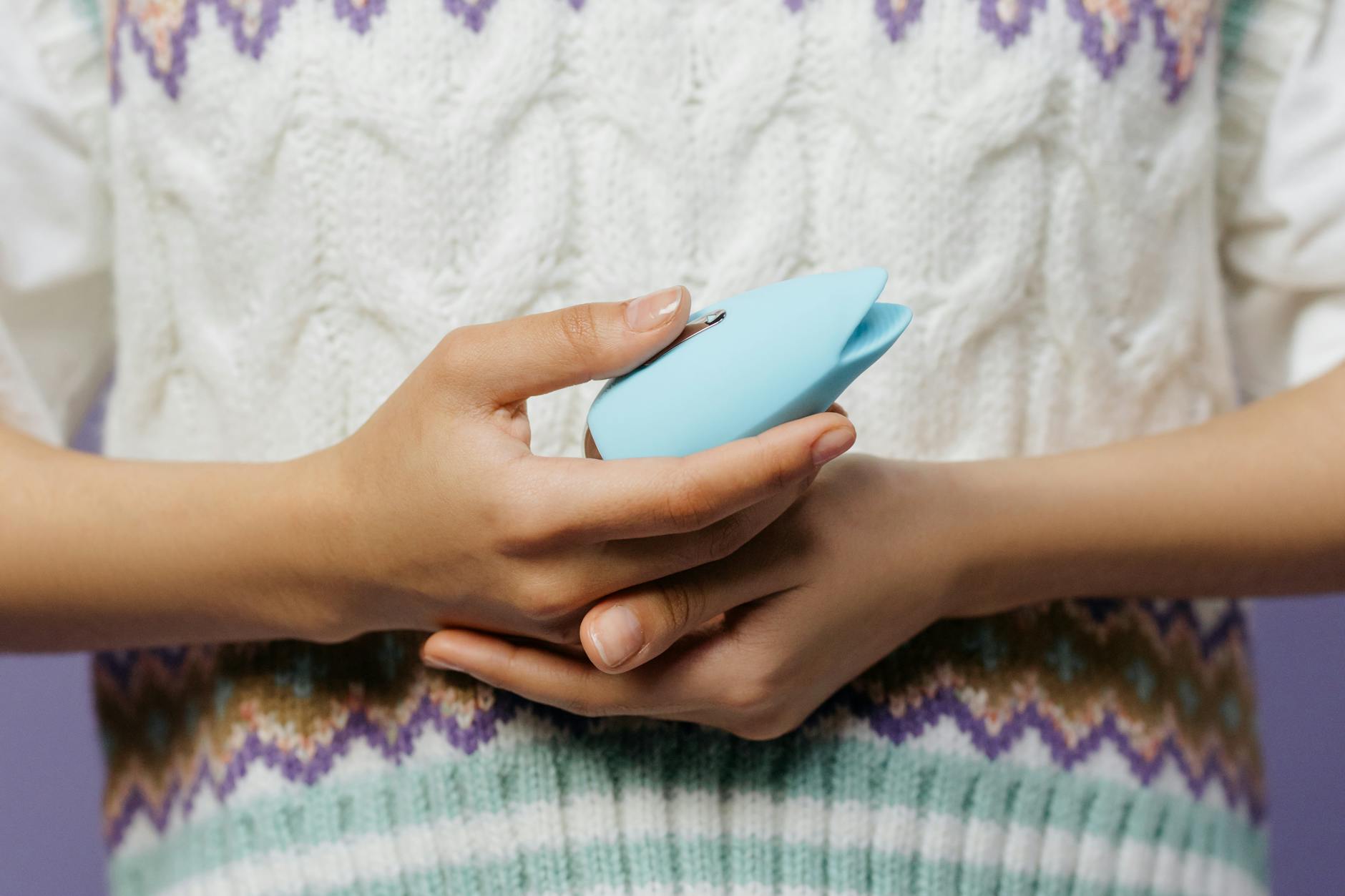
Photo by cottonbro studio on Pexels
When pleasure preferences signal something else
Sometimes mismatched preferences aren't random. Sometimes they're a symptom. One partner might be dealing with lower libido from depression, medication, or life stress. Another might have experienced trauma that makes certain kinds of touch feel unsafe. Another might be dealing with pelvic floor tension that makes direct pressure painful.
If you're introducing a lemon vibrator and one partner is still resistant, it's worth pausing and asking what's underneath. "I notice you're not into this. What would make you feel safer trying something?" Sometimes the answer is "I need more time." Sometimes it's "I need to talk to a therapist first." Sometimes it's "I need to feel more connected to you in other ways before we do this."
All of those are valid. A toy is not a substitute for emotional intimacy. It's an enhancement to it. If the foundation isn't there, a lemon vibrator won't fix it.
Permission to evolve together
Here's the thing that changes everything: your pleasure preferences don't have to stay the same forever. The partner who was resistant a year ago might be the one initiating now. The partner who wanted intensity might discover that suction feels better. People change. Preferences shift.
When you introduce a lemon vibrator as a way to explore together, instead of as a solution to a problem, the dynamic shifts. You're not fixing something broken. You're discovering something new. That's a completely different emotional experience.
The couples who do best with this are the ones who treat toys like curiosity, not like a last resort. They say, "Let's try this and see," instead of "We need to fix this." They laugh when something feels weird. They pause if something doesn't work. They come back to it. They change their minds.
That's the real skill. Not picking the right toy, but staying open to each other while you figure out what works.
People also ask
Can a lemon vibrator actually improve desire mismatch in a relationship?
A lemon vibrator won't fix desire mismatch on its own, but it can help in specific ways. If the mismatch is about efficiency, a lemon clitoral vibrator can actually speed up arousal and orgasm because the sensation is so direct. If the mismatch is about one partner finding regular vibration too intense, suction toys often feel gentler and more tolerable. If the mismatch is about emotional distance, using something together can rebuild connection. The real work is the conversation, though. The toy just opens the door.
What if my partner thinks using a toy means they're not enough?
This is about reframing. A toy isn't commentary on their body or their skills. It's a different sensation, the way a feather feels different from a hand. You might say, "I love sex with you and I also want to try this new feeling together." Emphasize that it's about expansion, not replacement. Let them watch you use it alone first so they see it's not threatening. And honestly, if they're still struggling, couples therapy can help untangle the insecurity underneath.
Do lemon vibrators work better than traditional vibrators for couples?
Not universally, but they work better for specific situations. If one partner finds traditional vibration too intense or overstimulating, a lemon vibrator's suction sensation is often more comfortable. If you want something that feels less mechanical and more like responsive touch, suction works better. If one partner wants very fast results and the other wants a slower buildup, a lemon vibrator is often a good middle ground. The key is trying it and seeing what your bodies actually respond to.
How do I bring up toys if my partner has already said no?
Don't push. Instead, let time pass and the context change. If they said no two years ago, they might say yes now. If they said no because they felt insecure, work on that insecurity first through conversation and reconnection. If you bring it up again, make it about something you've learned or a new reason, not about rehashing an old argument. "I read something that changed my mind about this," is different from "Why won't you just try it?" One invites curiosity. The other invites defensiveness.
What if we try a lemon vibrator and it doesn't work for us?
Then it doesn't work for you. That's fine. Putting it away doesn't mean you failed. It means you tried something, learned something about yourselves, and moved on. Some couples come back to toys later. Some never do. Both are normal. What matters is that you tried it together without judgment. That's the real intimacy.
Can lemon vibrators help if one partner has never had an orgasm?
Yes, often significantly. Lemon vibrators create a very efficient, consistent sensation that bypasses a lot of the performance pressure. If someone has never orgasmed with a partner, using a toy together can remove some of that pressure and help them focus on sensation instead of outcome. That said, if there's deeper anxiety or trauma around sex, a toy isn't a substitute for professional support. But as part of a broader approach, lemon vibrators are genuinely helpful.
The couples who thrive aren't the ones with perfectly matched preferences. They're the ones who stay curious about each other. A lemon vibrator is just a tool for that curiosity. The real work is showing up, asking questions, and caring more about connection than about being right. That's what actually changes things.